
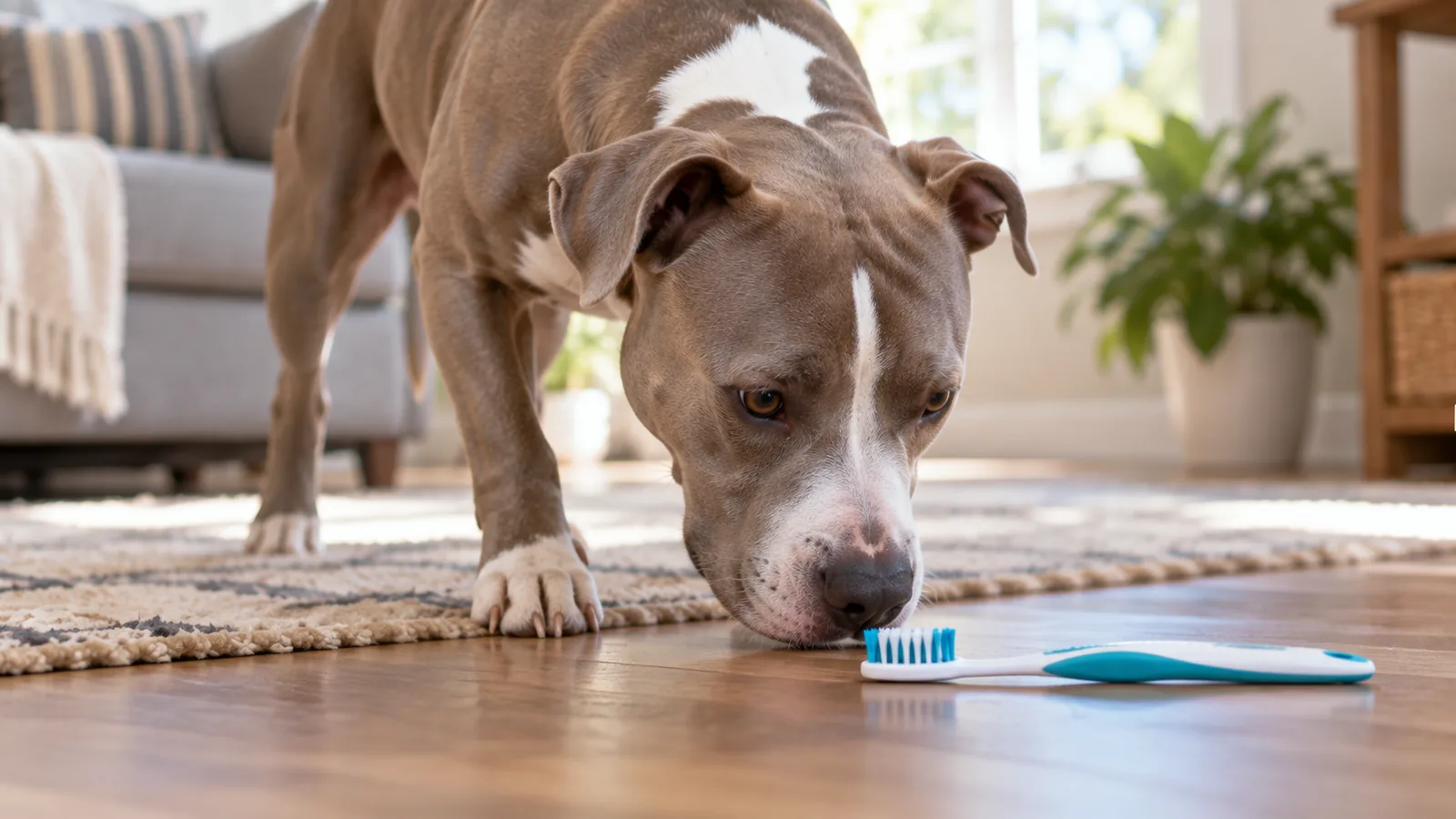
Deciding which dental products to buy for your dog or cat gets easier once you know that most of them were built to work alongside brushing, not instead of it. Wipes, gels, water additives, dental diets, and chews each earn a place by reaching what the brush misses or by filling in on the days you skip it. The research here is more specific than you might expect: brushing every day or every other day measurably slows plaque, once a week barely registers, and a combination of products outperforms any single one. That matters because plaque turns to tartar within days, and the work you put in between cleanings decides how often your pet needs a professional one and how involved it becomes.
Commonwealth Animal Care in Lexington checks your pet's mouth at every wellness visit, so you get an honest read on whether your home routine is holding up. We would rather help you build a routine you can keep than lecture you about the one you skipped. When your pet needs a professional dental cleaning, we scale and polish under anesthesia and examine below the gumline, which is the one place no brush, wipe, or gel can reach, and afterward we will tell you plainly which products are worth continuing and which you can stop buying. Request an appointment if you would like us to look at your pet's teeth or help you sort through the products you have already bought.
What Works, What Helps, and What Is Just Packaging
- Brushing is the gold standard, and short sessions most days beat a long scrub once a week.
- Wipes, gels, water additives, dental diets, and chews all have real data behind them, but they perform best layered on top of mechanical cleaning rather than as a swap for it.
- Combinations beat single products: a quick brush most days plus one supporting item does more than any one tool used perfectly.
- Nothing done at home removes hardened tartar or treats disease below the gumline, which is what a cleaning under anesthesia is for.
Why Does Plaque Turn Into Such a Big Problem So Fast?
Plaque becomes a problem this fast because it never stays soft for long. The film you can feel with a fingernail is bacteria, it forms within hours of a meal, and it hardens into tartar within days. Once those bacteria slip under the gum margin, periodontal disease starts dismantling the ligament and bone that anchor each tooth.
The earliest stage is quiet: margins gone red and slightly swollen, a trace of blood under a passing finger. That is gingivitis, and it reverses with the right treatment. Left alone, inflammation works deeper, pockets open around the roots, and teeth loosen or abscess with no outward sign. Bacteria and inflammatory byproducts from those pockets travel in the bloodstream, part of why chronic oral infection gets tied to added strain on the heart, kidneys, and liver. Early gum changes rarely look dramatic from the couch, and routine wellness exams are where they usually get caught while they are still simple to treat.
Does Brushing Actually Work, and How Often Does It Need to Happen?
Brushing works, and the frequency it needs is most days. Bristles break the bacterial film apart before it can mineralize, and nothing in a bottle or a bowl matches that. Brushing frequency is where most households fall short: teeth cleaned every other day held noticeably less plaque and tartar across several months, while a once-a-week session changed nothing worth measuring.
Thirty seconds tonight and thirty seconds tomorrow beats five careful minutes on the weekend, and it is a realistic ask once the habit exists.
How Do You Teach a Dog or Cat to Tolerate a Toothbrush?
You teach a dog or cat to tolerate a toothbrush by starting below the point where they object. A cat who swats on night one is telling you about the introduction, not the decade. Given a few weeks, pets settle into daily cleaning with stress and anxiety scores that fall rather than rise.
- Start with contact: Cup the muzzle and lift a lip for a second or two, then stop while it's still going well. Ending early is what builds tolerance.
- Let the flavor come first: Have your pet lick pet toothpaste off your finger for a few nights before any tool appears.
- Move to a fingertip: Run a finger or a square of gauze over the outer surfaces of the big back teeth, a few seconds per side.
- Bring in bristles: Once the finger step has turned boring, swap in a soft pet toothbrush and keep the session short.
- Make it predictable: Same hour, same spot, same order of teeth, every night.
Human toothpaste belongs in your own bathroom. Your pet swallows whatever goes in their mouth: fluoride should not go down, foaming agents unsettle stomachs, and xylitol in some brands can send a dog's blood sugar crashing.
Each species needs different hands. Brushing a dog's teeth goes best with bristles angled toward the gumline at about 45 degrees, small circular strokes, and your time spent on the outer surfaces where plaque piles up fastest. Brushing a cat's teeth usually means a finger brush or an ultra-soft head, a few seconds per side, coming in from beside the face rather than looming over it. Inner surfaces matter far less, and chasing them is what turns a cooperative cat into a former participant. The habits that sink a routine are predictable: marathon sessions, scrubbing until gums are sore, prying a mouth open, and quitting completely when a pet pulls away instead of backing up a step. If the first few attempts go badly, ask us for a brushing demonstration and we'll show you the hold and the angle on your own dog or cat.
What If My Cat Won't Let a Brush Near Their Mouth?
When your cat won't let a brush near their mouth, a cloth is the fallback worth having, and it holds up better than most families expect. Daily dental wipes and cloths brought plaque and gum inflammation down to nearly what a toothbrush achieved, while hardened tartar went untouched as expected.
Wipes, dental gloves, gauze, even a damp washcloth all rely on the same thing: friction against the tooth surface. They go over better than a brush because no handle comes at the face. What they can't do is slip under the gum margin or reach the last molars, which is where trouble usually starts. A cat who suddenly won't tolerate any mouth handling needs an exam, not a gentler product. Tooth resorption and stomatitis are common, painful, and beyond the reach of anything sold on a shelf.
Is a Water Additive or Gel Enough If You Never Brush?
A gel or additive alone is not enough, though it earns its place the moment something mechanical happens too. Water additives tested as the only intervention produced no significant drop in plaque or tartar. The same product layered over even a modest brushing habit beat that habit by itself.
Biofilm is a shield, and an antimicrobial that can't get through it never reaches the gum tissue underneath. Break the film up with a brush, a cloth, or a chew, and the active ingredient finally has somewhere to land. The same logic puts an additive begun right after a cleaning as a solid move; the cleaning removes the tartar and plaque, and the enzyme can do its job. On the label, look for enzymatic systems, zinc, chlorhexidine for short courses, or sodium hexametaphosphate, and treat a gel as a finishing step rather than the whole plan.
Some pets drink less when the water tastes odd, and reduced water intake is a bigger problem than plaque. Start water additives at a fraction of the labeled dose, keep a second bowl of plain water nearby, and build up over a week or two. Any pet with kidney or bladder disease deserves a conversation first, and if that history is unclear, in-house bloodwork and urinalysis answers the question before anything goes in the bowl.
Can a Dental Diet Do Part of the Job for Me?
A dental diet does carry part of the job. Cats fed a large fibrous dental kibble built to collapse around a tooth rather than crumble under it finished with less gingivitis and less tartar than cats on the other diets tested, which matters most for a cat who will never accept a brush.
Two mechanisms are at work. Some formulas coat each piece with a compound that binds calcium in saliva so deposits mineralize more slowly. Others use size and fiber alignment so the tooth sinks in and gets scrubbed on the way through. Ordinary small kibble does neither, and the old idea that dry food cleans teeth doesn't survive a close look. A dental diet stretches the time between cleanings instead of replacing them, which is worth real money for a pet already carrying extra risk from breed, age, or a history of periodontal disease.
Are Dental Chews Worth It, and Which Ones Are Dangerous?
Dental chews are worth it when they have been tested, and the dangerous ones are the ones you cannot dent. Dogs on a daily dental chew carried less plaque and less gum inflammation than dogs on none. Packaging proves nothing on its own, and plenty of products sold as dental chews have never been through a trial.
Hardness decides the rest. The break we see most often is a slab fracture of the big upper fourth premolar, and the cause is usually sitting in the treat aisle: antlers, bones, hooves, and hard nylon are all chews hard enough to fracture a tooth. Sort the shelf with your thumbnail, and put back anything your nail cannot mark.
| Chew category | Risk | What to know |
| Bones, antlers, hooves | High | Fractured teeth, often needing extraction |
| Hard nylon and hard plastic | High | Fails the thumbnail test; also wears enamel flat |
| Rawhide | Moderate | Swallowing and obstruction risk; supervise and size up |
| Tested dental chews | Low | Daily, matched to weight, counted in the calories |
| Pliable rubber toys | Low | An outlet for heavy chewers, minimal cleaning effect |
Chewing style counts as much as material, since the dog who inhales a treat in eight seconds needs a different product than the one who gnaws for an hour. Our veterinarians can look at both the habit and the teeth and tell you which category is safe for your dog.
How Do I Tell Which Products Are Worth Buying?
You can tell which products are worth buying from one seal on the package. VOHC-accepted products have met a defined standard for plaque or tartar reduction in controlled trials, which no marketing claim on the front of a bag can substitute for.
Behind that seal is the Veterinary Oral Health Council, an independent group that evaluates manufacturer trial data and grants its mark separately for plaque and for tartar. Toothpastes, wipes, gels, water additives, diets, and chews all appear on its list for both species, and nearly every category holds a verified option. Any product promising to dissolve existing buildup or whiten a stained tooth is selling an outcome nothing made for home use has ever produced. Our online pharmacy has a whole range of vet-trusted products you can choose from, and our team is happy to make recommendations.
| What you use | How strong the evidence is | Where it belongs |
| Toothbrush | Strongest there is | Most nights, outer surfaces |
| Wipe, cloth, or glove | Close behind, used daily | Pets who refuse bristles, cats especially |
| Tested dental chew | Solid for plaque and gingivitis | One a day, sized to the dog |
| Dental diet | Moderate, best data in cats | Base food for a higher-risk mouth |
| Gel, spray, or additive | Thin alone, useful stacked | Added to any mechanical step |
How Do You Keep a Dental Routine Going for Years?
A dental routine keeps going when it is built into a day that already exists.
- Hang it on a habit you already have: Brush when the dog comes in for the last time at night, or when you brush your own teeth. Then it is never a separate decision.
- Start layered: Pick one mechanical step and one supporting product on day one. Neither has to carry the whole mouth alone.
- Keep a bad-night option: A wipe or a chew covers the evening that gets away from you, and something always beats nothing.
- Spread it around the household: Whoever is home does it. Pets settle into a rhythm faster than they bond to one designated brusher.
- Let it change with age: A sore mouth, a healing extraction site, or a stiff senior changes what feels comfortable, and the routine should move with it.
Progress shows up as gums that quit bleeding, breath that stops clearing a room, and less crust along the gumline over a few months. The signs pointing the other way need an exam rather than another product: breath that suddenly worsens, dropping food or chewing on one side, drooling, pawing at the face, a loose or discolored tooth, or a flinch when you touch a cheek. Don't scrape buildup off yourself with a fingernail or a scaler bought online. That scratches enamel and leaves the roots untouched. Give us a call and we'll get a proper look instead.
What Happens During a Professional Cleaning, and Why Can't Home Care Replace It?
A professional cleaning does two things home care cannot: it removes what has hardened below the gum margin and it examines every tooth individually. Only a cleaning under general anesthesia makes that possible.
Asleep, a mouth holds still long enough to be examined properly. We scale above and below the gum margin, polish the enamel smooth so new plaque has less to grip, and probe each tooth for pockets. Dental X-rays add what no visual check can reach, since roughly two-thirds of every tooth sits in bone. What those images show decides the plan. Our team provides anesthetized dental cleanings and extractions right here in Lexington, and you'll hear plainly what we found.
Picture the tooth that looks brighter after an hour of scraping on an awake pet. The crown changed. Nothing underneath did, because anesthesia-free dentistry cannot reach the pocket where attachment is quietly being lost. Sharp instruments near a face nobody has numbed, in a pet who is scared and restrained by strangers, carry their own risk.
Many pets do well with a cleaning once a year, while small breeds, flat-faced dogs, and any pet with a history of periodontal treatment often need one twice a year. Strong home care is what stretches that interval.
Your Pet Dental Home Care Questions, Answered
Can something from the kitchen replace pet toothpaste?
Nothing in your kitchen replaces pet toothpaste well. Baking soda carries too much sodium, tastes bad enough to end the routine, and can upset a stomach once swallowed. Coconut oil has no meaningful plaque data behind it and adds calories a small dog doesn't need. If you're out of pet paste tonight, a brush dipped in plain water still does the mechanical work. Long term, an enzymatic pet formula is worth it mostly because the flavor keeps your pet volunteering.
My pet already has a lot of tartar. Is it too late to start brushing?
It is not too late to start brushing, though brushing won't take existing tartar off. Hardened deposits only come off with instruments under anesthesia, and brushing over heavy buildup and inflamed gums can be uncomfortable enough that your pet refuses the whole idea. The better order is a cleaning first, then a routine started on a clean, polished surface. Families who begin that way usually find their pet accepts brushing far more readily than they expected.
When should brushing start again after a dental cleaning?
Brushing can start again once the mouth is comfortable, which after a simple cleaning is usually just a few days. If teeth were extracted, those sites need time to heal, and we'll tell you specifically when and where to resume based on what we did. Starting soon after a cleaning matters more than people realize. The tooth surface is as clean as it will ever be, and every day of brushing from that point slows the rebuild.
Strong Mouths for Lexington's Dogs and Cats
Healthy mouths at ten years old got there on a combination, not on one product. A short brush most days, one supporting product layered on top, and a cleaning when the mouth needs one is what the evidence keeps pointing back to. Commonwealth Animal Care sees plenty of Lexington dogs and cats whose teeth quietly got away from them. Most of those families weren't careless. They just never got shown what to do with a squirming cat and a tube of paste. Schedule a dental exam and we'll go through what's realistic for your household.