
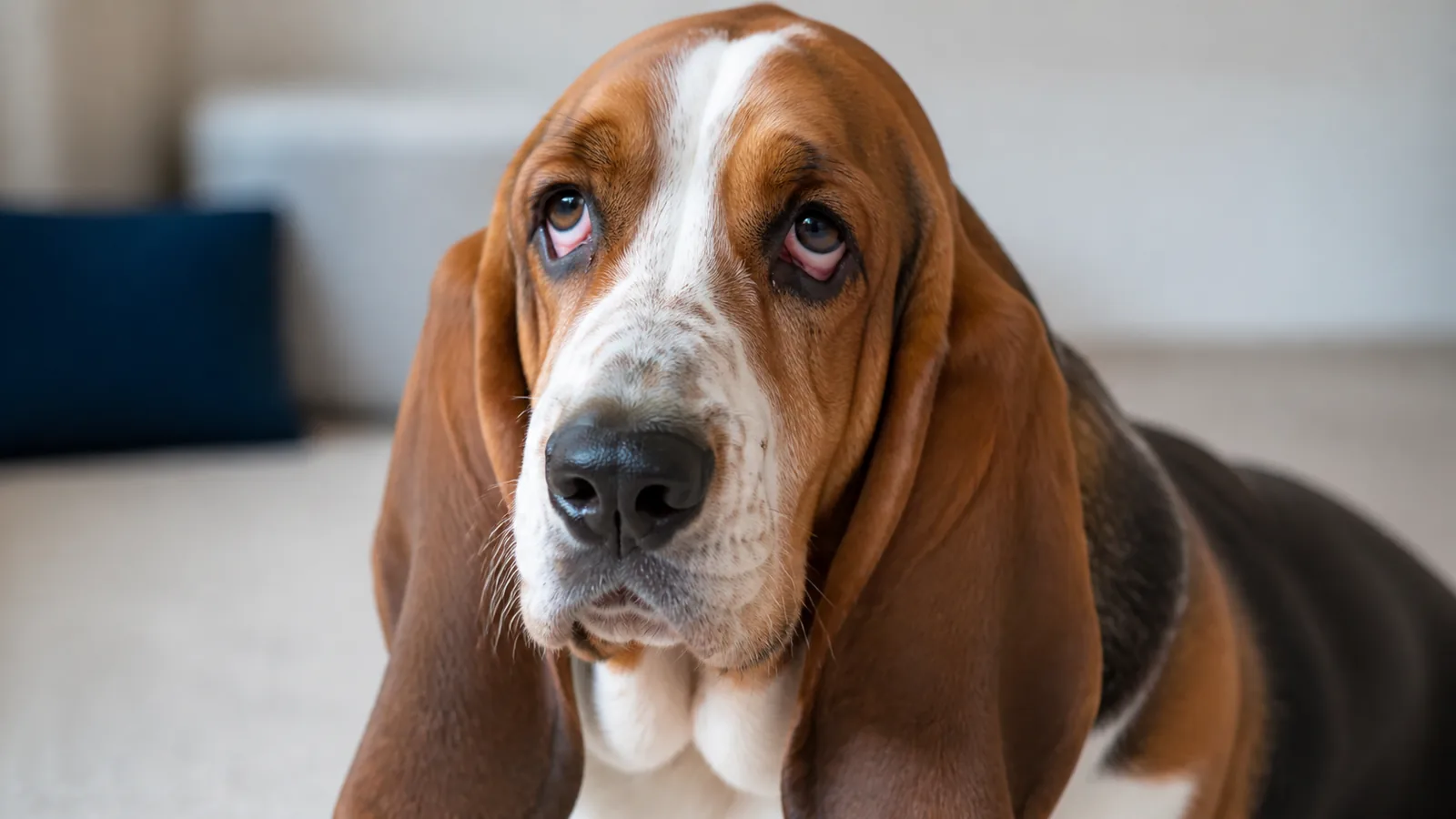
When a dog or cat needs entropion or ectropion surgery, what the procedure corrects is eyelid position. A rolled-in lid (entropion) is set back so it stops dragging hair across the eye, and a sagging outer one (ectropion) is tightened until it covers and protects the way it should. Most pets do very well afterward, but surgery cannot undo damage that is already there, so pigment or scarring from months of rubbing can stay behind even once the lids sit correctly. That is why the weeks beforehand matter: lubrication and any prescribed drops on schedule, the lids kept clean, and rubbing and wind exposure limited until then.
Eyes like these start with an exam at Commonwealth Animal Care in Lexington, where we look closely at the lids and the cornea, begin protecting the surface, and recheck as the surgery date approaches. We also handle the surgical planning, including testing before anesthesia, a protocol built around your pet's health status, and a full physical exam the day of the procedure. When a correction calls for a specialist, we can arrange for one to operate here at our hospital or at a specialty practice we trust. If your dog or cat is squinting, tearing, or rubbing at an eye, set up a visit so we can look at it and tell you which changes mean the eye should be seen sooner.
Start Here: Eyelids That Don't Fit
- Entropion rolls an eyelid inward so hair drags across the cornea, while ectropion lets the lower lid sag away and leaves the eye dry and exposed to debris.
- Both usually come from inherited facial structure rather than something that went wrong, which is why they cluster in certain breeds and in flat-faced cats.
- Surgery corrects lid position for good in most pets, though puppies and kittens sometimes need a temporary hold while their face finishes growing.
- Squinting, tearing, and pawing at an eye mean pain, and the longer the rubbing goes on, the more corneal damage stays behind after the lids are fixed.
What's the Difference Between Entropion and Ectropion?
Entropion turns the lid inward, so lashes and haired skin sweep the surface of the eye with every blink. Ectropion runs the other direction, with the lower lid sagging away from the eye and leaving the pink inner tissue exposed to wind, dust, and debris. One scrapes. The other dries out.
| Feature | Entropion | Ectropion |
| What the lid does | Rolls inward against the eye | Sags outward, away from the eye |
| What you notice | Squinting, tearing, an eye held shut | A droopy lid, visible pink tissue, gritty crust |
| What it does to the eye | Friction, ulcers, pigment and scarring | Drying, trapped debris, repeat infections |
| Who tends to have it | Shar-Pei, Chow Chow, Bulldogs, Retrievers, flat-faced cats | Bloodhounds, Bassets, Saint Bernards, Cockers |
Plenty of eyes don't read that cleanly. The same lid can roll in at the corners and sag in the middle, and a painful eye needs a full look at lid position, tear film, and cornea rather than a guess.
Why Do Some Dogs and Cats End Up With Eyelids That Don't Fit?
Most eyelid disorders trace back to the face a pet was born with, which is why the same handful of breeds turn up in the exam room again and again. Loose skin, a shallow or deep-set socket, and a heavy brow all change how a lid meets the eye.
Entropion clusters in dogs built with extra skin above the eye: Shar-Pei, Chow Chow, Bulldogs, Bullmastiffs, and Rottweilers, plus sporting breeds whose lower lids roll in at the outer corner. Because hereditary eyelid conditions pass down through breeding lines, a puppy whose parents or littermates needed correction carries a higher risk from day one. Cats aren't spared, and flat-faced breeds such as Persians and Himalayans carry the shallow orbits and skin folds that push a lower lid inward. Ectropion runs with the droopy lower lid that gives Bloodhounds, Basset Hounds, Saint Bernards, and Cocker Spaniels their expression, and a few giant breeds manage both at once.
Breed isn't the whole story:
- Age: Lid tissue loses tone over the years, and an eyelid that sat fine for a decade starts to sag.
- Chronic inflammation: Allergies and repeated conjunctivitis thicken and reshape a lid margin over time.
- Old injuries: A healed laceration or a scar near the margin can tug the edge out of position.
- Pain: Any sore eye makes a pet clamp down, and hard squinting alone can roll a lid inward.
Breed risk is worth raising at wellness visits while a puppy or kitten is still growing, before the rubbing has a chance to leave a mark.
Which Signs Mean the Eye Is in Pain?
Squinting, tearing, pawing at the face, or holding one eye shut are signs of eye pain, not personality quirks or seasonal allergies. Pets are quiet about discomfort, so a lid that stays half closed for a day or a rust-colored tear stain down the cheek deserves an exam rather than a wait-and-see week.
Other things worth a look:
- Redness along the lid margin or across the white of the eye.
- Thick yellow or green discharge, or crust that keeps rebuilding.
- A cloudy or bluish patch on the surface.
- Face rubbing on carpet, furniture, or a paw.
- A lid edge you can see rolled in, or a droop that shows pink tissue.
Hair and lashes dragging across the eye wear through the surface, and corneal ulcers that start as a shallow scrape can deepen toward rupture when the friction is never removed. Even after healing, the cornea often lays down brown pigment where it was irritated, and enough of that clouds vision for good. Damage from a sagging lid builds more slowly. With ectropion, the exposed lid pocket collects dirt and dries out, so thick or repeated eye discharge tends to come back within weeks of every course of drops.
One thing to skip at home: leftover medication. Never put a steroid-containing ointment from an old flare into a painful eye, because it can turn a small ulcer into a deep one, and human eye products aren't a safe stand-in either. Leave lash and lid-margin trimming to us as well, since scissors that close to a cornea are their own hazard. If an eye hurts, have it examined before anything goes into it, so the right drop is chosen from the start.
How Do We Tell One Eyelid Problem From Another?
Sorting this out starts by watching how each lid sits before anything touches the face. A few quick ocular tests fill in what the naked eye misses: fluorescein stain reveals corneal damage, a tear strip measures moisture, and pressure readings rule out glaucoma.
- Lid position first, hands off: We watch before we handle, since holding a head still can push a borderline lid into or out of place.
- A drop of topical anesthetic: This is the most useful step in a squinting eye. If the lid unrolls once the pain is gone, the trouble is spastic squinting from an ulcer, not anatomy, and treating the surface may settle the lid on its own.
- A hunt for stray hairs: Extra lashes along or through the margin cause identical scratching and need a different repair.
- The rest of the pet: Allergies, facial folds, and skin disease around the eye feed back into lid position, so the exam doesn't stop at the eyelid.
In a growing puppy we may measure, treat, and recheck in a few weeks rather than commit to numbers on a face that's still changing.
Does Every Rolled Eyelid Need Surgery?
Not every eyelid goes straight to the operating room. A puppy whose face is still filling out, or a pet whose lid is clamped inward by the pain of an ulcer, often does better with a temporary measure while the real problem settles. Definitive repair works best on a mature, comfortable eye.
Can a Temporary Fix Buy Time in a Growing Puppy?
Temporary eyelid tacking places a few small sutures to roll the lid outward and hold it there while a puppy or kitten finishes growing into their face. The hair comes off the cornea right away, the stitches come out in a couple of weeks, and tacking can be repeated if the lid rolls again. Some youngsters grow out of the problem entirely, and the ones who don't can be measured for permanent correction once the skull has stopped changing.
What Does Permanent Eyelid Repair Involve?
Permanent eyelid surgery removes a measured crescent of skin so the lid margin settles into normal position for good. Take too much from a lower lid and you've traded entropion for ectropion, which is why a first pass is deliberately conservative. Technique depends on which part of the margin is involved, how much roll there is, and whether the patient is a dog or a cat, so the plan is drawn on the individual face.
How Is Entropion Different in Cats?
Cats break the dog pattern. Entropion in cats usually shows up later in life and often alongside another surface problem, such as chronic viral keratitis or a healed corneal injury. Because the lid trouble is frequently secondary, both pieces need treating, and a cat may need a combination of techniques on one eye. Older cats who have lost weight are another group, since the fat cushion behind the eye thins and the lid follows it inward. Flat-faced kittens sit at the opposite end, born with the crowding that rolls a lower lid in early. If your cat squints or has an eye that always looks wet, reach out and we'll examine the surface as well as the lid.
What Happens on the Day of Eyelid Surgery?
The day opens with a fresh physical exam and another look at the lids, because swelling and pain change what a margin does from one week to the next. Surgery at Commonwealth starts with pre-anesthetic bloodwork testing before anesthesia, a protocol chosen for your pet's age and health, pain medication started early, and steady monitoring fill in the rest.
- Check-in: We confirm fasting, review current medications, and go over the plan with you before your pet goes back.
- Anesthesia and monitoring: An IV catheter, fluids, and continuous tracking of heart rate, blood pressure, oxygen, and temperature.
- The correction: The lid is measured on the table and checked again as the sutures go in, aiming for a margin that sits right rather than one pulled as far as it will go.
- Waking up: An Elizabethan collar goes on before your pet is fully awake, and pets head home once they're alert and comfortable.
Flat-faced patients get extra attention around anesthesia, since a short nose and a crowded airway need closer watching going under and especially coming back up. Drop-off is usually harder on you than it is on your pet. By evening, most are quiet, sore in a manageable way, and finally free of their eyelid discomfort.
What Does Recovery Look Like at Home?
Recovery is short but strict, and it hangs on one thing: nothing touches that lid for about two weeks. Bruising and puffiness along the incision are expected early on, and comfort usually improves fast once hair is no longer sweeping the cornea.
What's Normal in the First Few Days, and What Isn't?
Expect mild swelling that peaks around day two, clear or slightly pink watery discharge, and squinting that eases a little each day. Sutures sitting near the lid margin look bumpier than most families picture.
Reasons to call us:
- Yellow or green discharge, or swelling that grows after day three.
- A missing suture, a gap in the incision, or bleeding.
- An eye held shut again after it had opened up.
- New cloudiness, or a pet who has outsmarted the collar.
That collar is not optional. One good scratch can undo a careful repair in a second. Administering eye medications goes more smoothly when you steady the head from behind, rest your hand against the skull, and let the drop fall onto the eye without the tube touching the surface. Drops go in before ointments, leave a few minutes between different products, and finish with a treat so the next round is easier.
How Long Until the Lids Settle?
Healing follows a fairly predictable schedule, though the final word on lid position comes later than most families expect.
| Timeframe | What's happening |
| Days 1 to 3 | Swelling peaks, medications on schedule, collar stays on |
| Days 4 to 10 | Discharge fades, comfort improves, activity still limited |
| Around 10 to 14 days | Recheck and suture removal if the sutures aren't absorbable |
| 3 to 6 weeks | Swelling fully resolves and the lid takes its final position |
| Later | An occasional minor revision if a small amount of roll remains |
That last row is why we don't call a result final at the two-week recheck. A conservative approach is always better than an aggressive one, so some pets may need a revision later. That’s normal, and a part of being a careful surgeon.
How Well Does Eyelid Surgery Work?
Most dogs and cats do very well. A correction made on a mature, stable lid usually holds for life, and the change shows up within days: less squinting, less tearing, a pet who stops pulling away when you reach toward their face.
What an operation can't reverse is damage already sitting on the cornea. Pigment and scar tissue built up over months of friction tend to stay, and haze across the visual axis may cost some sight permanently. The pain still stops, and the eye stops getting worse. What affects the end result long term:
- How far the lid was rolled: A subtle turn at one corner is simpler than a margin folded in along its length.
- How long it went on: Earlier corrections leave less scarring behind.
- Whether growth is finished: A repair made on a changing face may need revisiting.
- Home care: The collar and the medication schedule during those two weeks do a real share of the work.
Our team would rather examine an eye twice than commit to numbers early, because results track with careful measurement more than anything else. If you show or plan to breed, check your registry and breed club rules first, since some consider a corrected eyelid disqualifying and most expect it to be disclosed. After healing, eyes get a close look at routine wellness exams.
Eyelid Surgery Questions Pet Families Ask Us Most
Can entropion come back after surgery?
It can, though that's uncommon in an adult whose face has stopped changing. Recurrence shows up most in pets corrected very young, in heavy-skinned breeds whose facial skin keeps stretching, and in eyes where only part of the problem was addressed the first time. A small residual roll is usually handled with a minor revision rather than a whole second procedure, which is why we recheck once the sutures come out.
Will my dog's face look different afterward?
Only slightly, and usually in a way that reads as a more open, more comfortable eye. The incision follows the natural line near the lid margin, and hair grows back over it within a few weeks. Families who worried about losing their dog's expression tend to say the face looks like itself again, minus the squint. When a heavy-skinned breed needs a larger correction, we'll talk through what to expect before the surgery date.
Do both eyes have to be done at the same time?
Often, yes. Entropion and ectropion usually come from conformation both eyes share, so correcting them together means one anesthetic episode and one recovery. If only one side is affected, we fix that side and keep watch on the other, particularly in a young dog whose face is still developing. The call comes from what the exam shows rather than a blanket rule.
You Don't Have to Guess About a Squinting Eye
Entropion and ectropion are among the more fixable eye problems we see, and pets who come through the repair are usually more comfortable than they've been in months. The hard part for families is the stretch beforehand, when an eye looks angry and there's no way to tell from the couch how urgent it is. Bring it to us at Commonwealth Animal Care in Lexington, where you can schedule a visit with us and we'll examine your pet, tell you plainly what we find, and lay out the surgical care options if a correction is the right call.